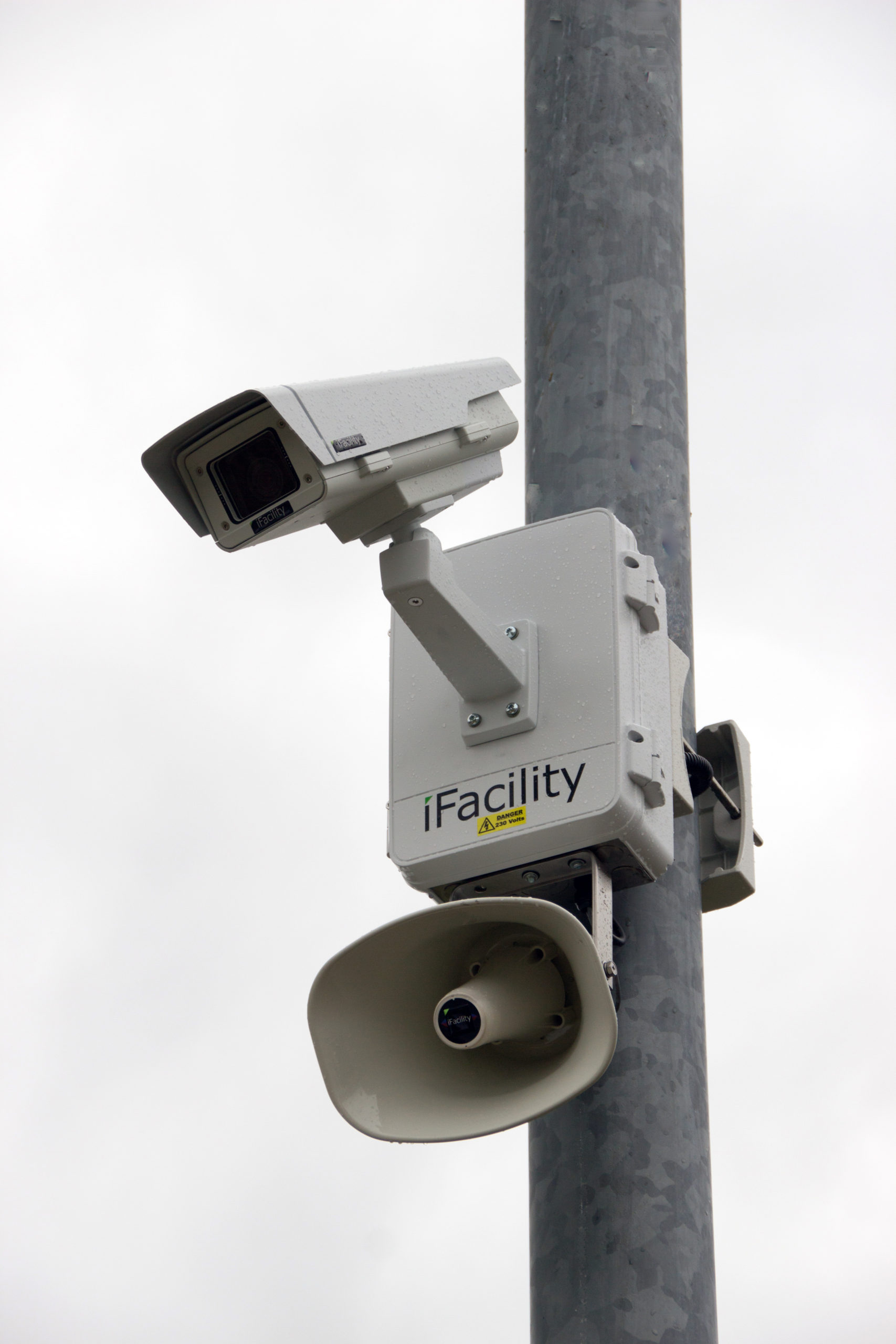
Direct evidence is unavailable
Can you be charged in court if nobody saw you committing the crime? Mark Twain said, ‘Nothing spoils a good story like the arrival of an eyewitness’.
If no eyewitness is available and the police is also unable to find other direct evidence such as CCTV, it can be difficult for the prosecution to prove a criminal case. Direct evidence may not be present every time someone commits a crime. If there is a rule that says police can only use direct evidence, then most crimes can never be prosecuted.
For obvious reasons, criminals generally commit crimes when nobody is watching. CCTV may be unable to monitor crimes that are committed in the dark or when its’ view is blocked. When witnesses are available, they might not be able to give evidence in court.
Prosecuting a criminal case becomes impossible. If this happens too frequently, then no one can ever be charged in court. Criminals go scot-free, committing more crimes.
The law, however, allows the police to gather other types of supporting evidence. They are called circumstantial evidence. The Evidence Act 1950 (the law governing proof in court) allows the prosecution to bring in other supporting evidence to support their case.
This other type of supporting evidence is called circumstantial evidence.
So, you can still be charged in court if there is no direct evidence.
Circumstantial evidence in a criminal case
Case study
For example, PanjangTangan (a fictitious character) is accused of stealing an expensive Wallet from a supermarket. There was no witness. The security guards happened to stop PanjangTangan at the exit after he triggered the scanner. PanjangTangan told the guards that the scanner is broken and complained that he is being harassed unnecessarily.
The guards requested him to empty his pockets. They found a Wallet with the supermarket’s price tag and security tag. PanjangTangan was surprised and was unable to produce any receipt for the Wallet. When the supermarket Manager viewed the CCTV recording, he found the Wallets’ section view to be blocked by a big bunting. He couldn’t confirm if PanjangTangan actually took the Wallet. PanjangTangan denies the allegations and claims this was a set-up.
Later, PanjangTangan was charged in court for theft. Based on the above facts, the prosecution may want to tender the following proof as evidence in court:
Evidence 1: The Wallet found on PanjangTangan with price tag and security tag still intact.
Evidence 2: The Security Guard who heard the alarm and stopped PanjangTangan from leaving the premise.
These evidence alone may not prove that PanjangTime has committed theft. No one saw him taking the wallet and keeping it in his pocket. It is also inconclusive because there is no CCTV footage too!
Court will evaluate the strength of the evidence in criminal case
During the trial, the judge will evaluate these evidence. Firstly, whether Evidence 1 and 2 are relevant to the case? [Why? factor] If yes, how Evidence 1 and 2 are being proved in court? [How? factor]
In reaching a verdict, the court must be satisfied that PanjangTangan has taken the wallet. During trial, PanjangTangan also will have his chance to challenge prosecution’s circumstantial evidence.
Accused explains the evidence
Although, prosecution is allowed to tender circumstantial evidence in criminal cases. A case based entirely on circumstantial evidence has its weaknesses. Firstly, circumstantial evidence, as it suggests, is based on circumstance. If the circumstances can be explained, then the criminal case is based on a pure chance. A mere co-incidence. Nothing points to PanjangTangan’s guilt in committing the theft.
Integrity of evidence
Secondly, there are various other external factors involved in the criminal process. These factors have impact on the quality of the evidence too: important to convince the court. Right from the beginning the evidence was gathered, to the exact moment it is reproduced in court.
The prosecution has to ensure that there is no break in the evidence’s chain of custody. It cannot afford to lose sight on the evidence whereabouts. If there is a break, it can have serious effect on the evidence’s integrity. A simple mistake, such as producing the wrong Wallet in court can be fatal for the prosecution. Ergo, casting doubt in prosecution’s case!
Evidence must point to guilt
Thirdly, the evidence relied on by the prosecution must point to PanjangTangan’s guilt. In Sunny Ang v PP [1966] 2 MLJ 195, Chief Justice Tan Ah Tah said “the effect of all this evidence drives you inevitably and inexorably to the one conclusion and one conclusion only: it was the accused who intentionally caused the death [crime].” Taking stock of all prosecution’s evidence, the Court must be convinced that the accused did it.
Determining PanjangTangan’s guilt based on circumstantial evidence
If the Court finds that the prosecution has failed to make its’ case, it will acquit PanjangTangan. He is a free man now. However, if the prosecution’s case is proved, then PanjangTangan will be called to enter defence. PanjangTangan’s will have to explain his side of the story, if he wishes.
At this point, PanjangTangan has 3 choices. He can either give sworn evidence, read his defence statement from the dock or remain silent. By reading his statement, he doesn’t have to do anything more than that. The prosecution, also will not be able to cross-examine his testimony.
However, a statement read from the dock carries lesser weight than sworn evidence. If PanjangTangan chooses to give sworn evidence, he will provide his side of the story and then, the prosecution will be given chance to cross-examine him. This is to challenge the veracity of his testimony. This process of cross-examination is applicable to every other witness who comes to court to give evidence. If PanjangTangan chooses to remain silent, the Court will then proceed to find him guilty.
Tail end of criminal case
At the end of the trial, if the Court finds the prosecution’s case remains unchallenged and PanjangTangan’s defence is equally doubtful, PanjangTangan can be found guilty for theft. The court, may then convict PanjangTangan.
The burden for the prosecution to prove its’ case remains the same: to prove a case beyond reasonable doubt. A criminal case based partially or solely on circumstantial evidence is required to reach the same standard of proof.
Justice served
A strict rule that requires all prosecution must be based on direct evidence can become too impractical. This could lead to ineffective enforcement. Further eroding confidence in the criminal justice system. The public also expects that all perpetrators are swiftly prosecuted. One of the means to ensure everyone’s access to justice is through admitting circumstantial evidence.
Brain teaser
Direct evidence is often compared with circumstantial evidence as two different evidence.
However, you can only prove circumstantial evidence through direct evidence. Not otherwise.
By
Sreetharan Vallithan